
How to Improve Meeting Room Acoustics and Reduce Echo

Thu Oct 29 2026
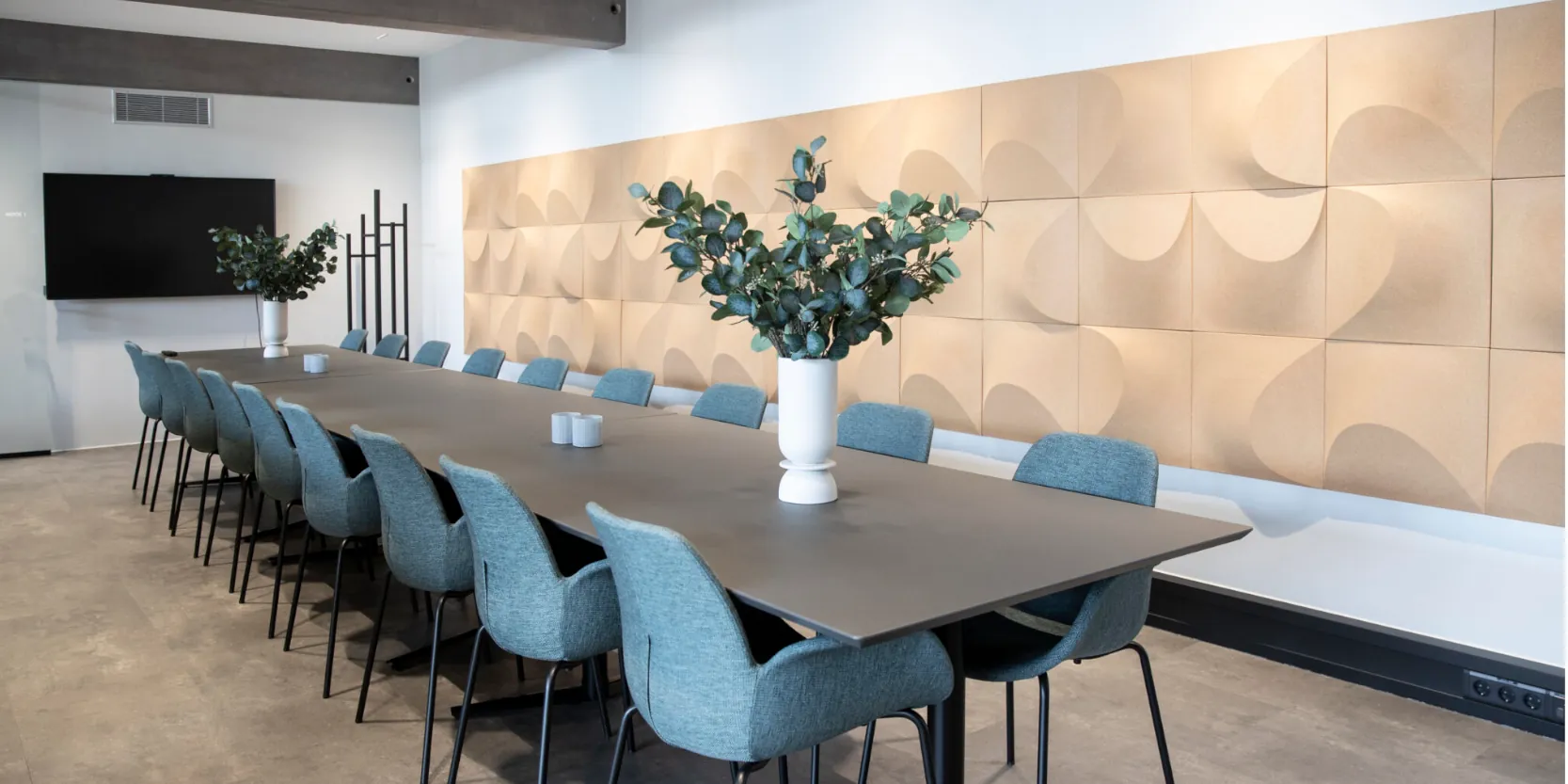
Meeting rooms should make communication easier, yet poor acoustics can make even simple conversations difficult to follow. Glass partitions, bare walls and exposed ceilings reflect sound around the room, reducing speech clarity and affecting communication during both in-person meetings and video calls.
In many cases, acoustic treatment can improve the room without changing its appearance or how it’s used.
What causes poor meeting room acoustics?
Modern offices often favour glass, hard flooring and minimal soft furnishings. While these finishes create a clean, contemporary look, they offer little sound absorption
When someone speaks, some sound reaches listeners directly, while the rest reflects off surrounding surfaces. If there isn’t enough absorption, those reflections persist and can overlap with speech. This is known as reverberation.
Reverberation time (RT60) measures how long sound takes to decay by 60 decibels after the source stops. For smaller rooms used mainly for meetings and video conferencing, 0.4–0.6 seconds is often a suitable target, although this depends on the room’s size and intended use. The WELL Building Standard has also published a 0.6 second RT60 recommendation for conference rooms.
Not every meeting room noise problem is caused by reverberation. Ventilation noise and conversations coming through doors or partitions are separate issues that may require different solutions.
Why acoustics matter for meetings and video calls
Excessive reverberation reduces speech intelligibility and increases the effort required to follow conversations. This can be particularly challenging for people with hearing difficulties. As RNID explains, background noise and reverberation can both make speech harder to understand.
The problem is often more noticeable during video calls. Microphones capture reflected sound as well as direct speech, which can make speech harder for remote participants to understand. Better conferencing equipment may help, but it cannot always compensate for a highly reverberant room. Microsoft’s meeting room design guidance also highlights the importance of acoustic treatment for achieving clear audio during hybrid meetings.
Reducing unwanted reflections helps make discussions clearer and more comfortable for everyone involved.
How to reduce echo in a meeting room
The most effective way to reduce excessive reverberation is to introduce sound-absorbing materials. The appropriate solution depends on the room’s finishes, layout and available space.
Acoustic wall panels
Acoustic wall panels absorb reflected sound and are particularly useful where there are suitable solid walls. High-performance fabric-wrapped panels provide effective absorption, while decorative acoustic felt can blend into an office interior or incorporate company branding.
Wall treatment can also help control repeated reflections between opposing hard surfaces.
Ceiling rafts and acoustic ceiling panels
Ceilings are often the best available surface in glass-partitioned meeting rooms. Suspended acoustic rafts can sit above meeting tables without occupying wall space. Where ceiling height is restricted, direct-fixed panels may be more suitable, provided the ceiling construction allows them.
Which acoustic treatment is right for your meeting room?
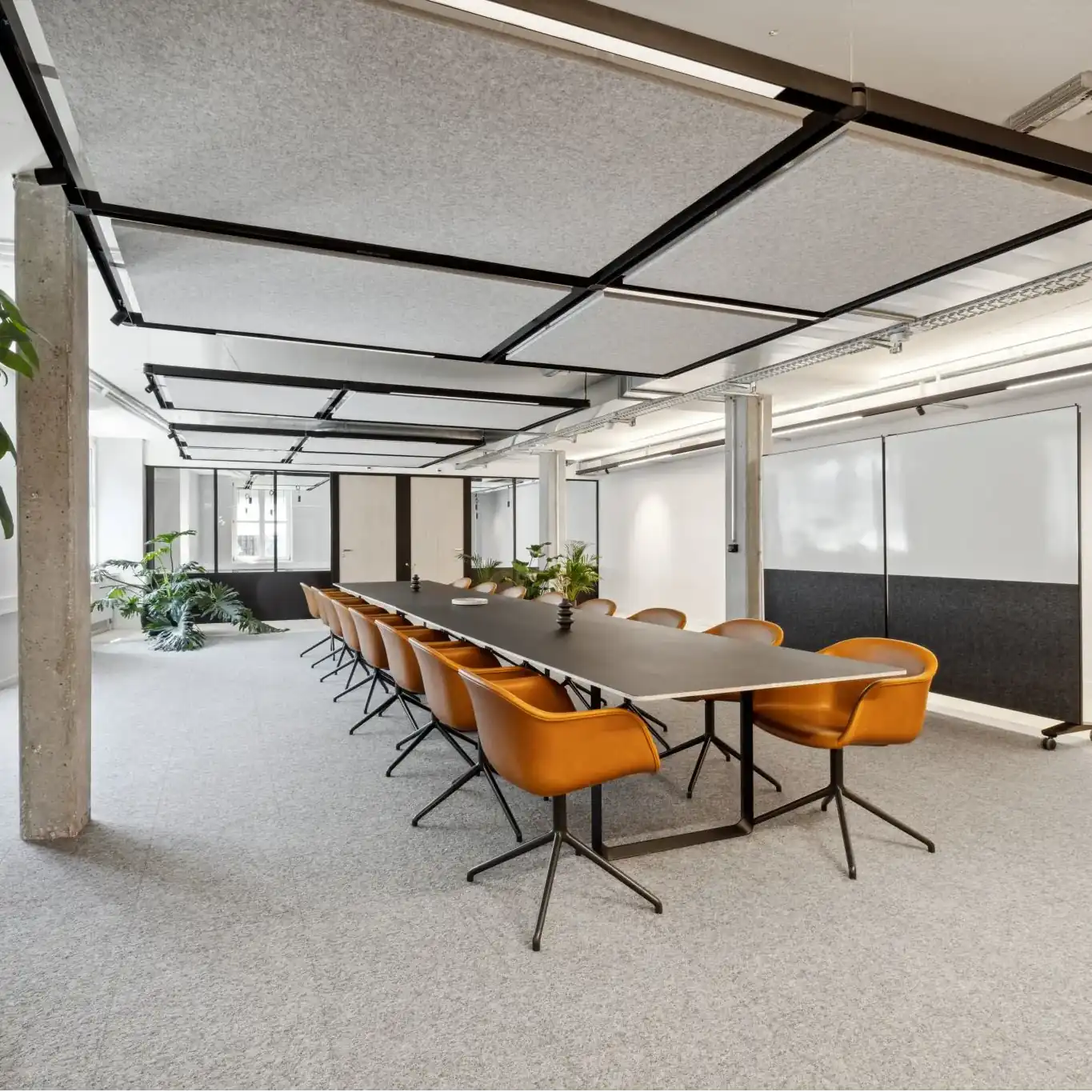
The most effective approach depends on the room’s existing absorption and the surfaces available for treatment. In some cases, wall panels are sufficient, while others benefit from treating both the walls and ceiling. For example, a meeting room with an existing acoustic ceiling may need additional wall absorption, whereas a room with glazed walls and exposed concrete overhead may be better suited to ceiling rafts.
The panels’ absorption performance and how they are installed are also important considerations. The amount of treatment should be based on the room’s acoustic requirements, rather than simply covering every available surface.
Improving acoustics in glass meeting rooms
Glass partitions allow natural light into offices, but their reflective surfaces can contribute to poor room acoustics. Combined with hard flooring and an untreated ceiling, they can create particularly challenging acoustic conditions.
Fortunately, glass doesn’t need to be covered to improve the room. Ceiling rafts and panels on the available solid walls can add absorption while preserving the open appearance.
There is also an important distinction between sound absorption and sound insulation. Panels that reduce reverberation inside a room won’t necessarily stop confidential conversations being heard outside it. Doors, seals, glazing and partitions may need separate attention.
How much acoustic treatment does a meeting room need?
There is no standard number of panels for every meeting room. A carpeted space with an acoustic ceiling will generally need less additional absorption than one surrounded by glass and concrete.
At Koru Acoustics, we assess room dimensions, surface finishes and intended use, then use acoustic modelling to estimate reverberation time and calculate the absorption needed. This helps us recommend a practical arrangement that balances performance, appearance and budget.
A real-world example: Meeting room and media space in a London office
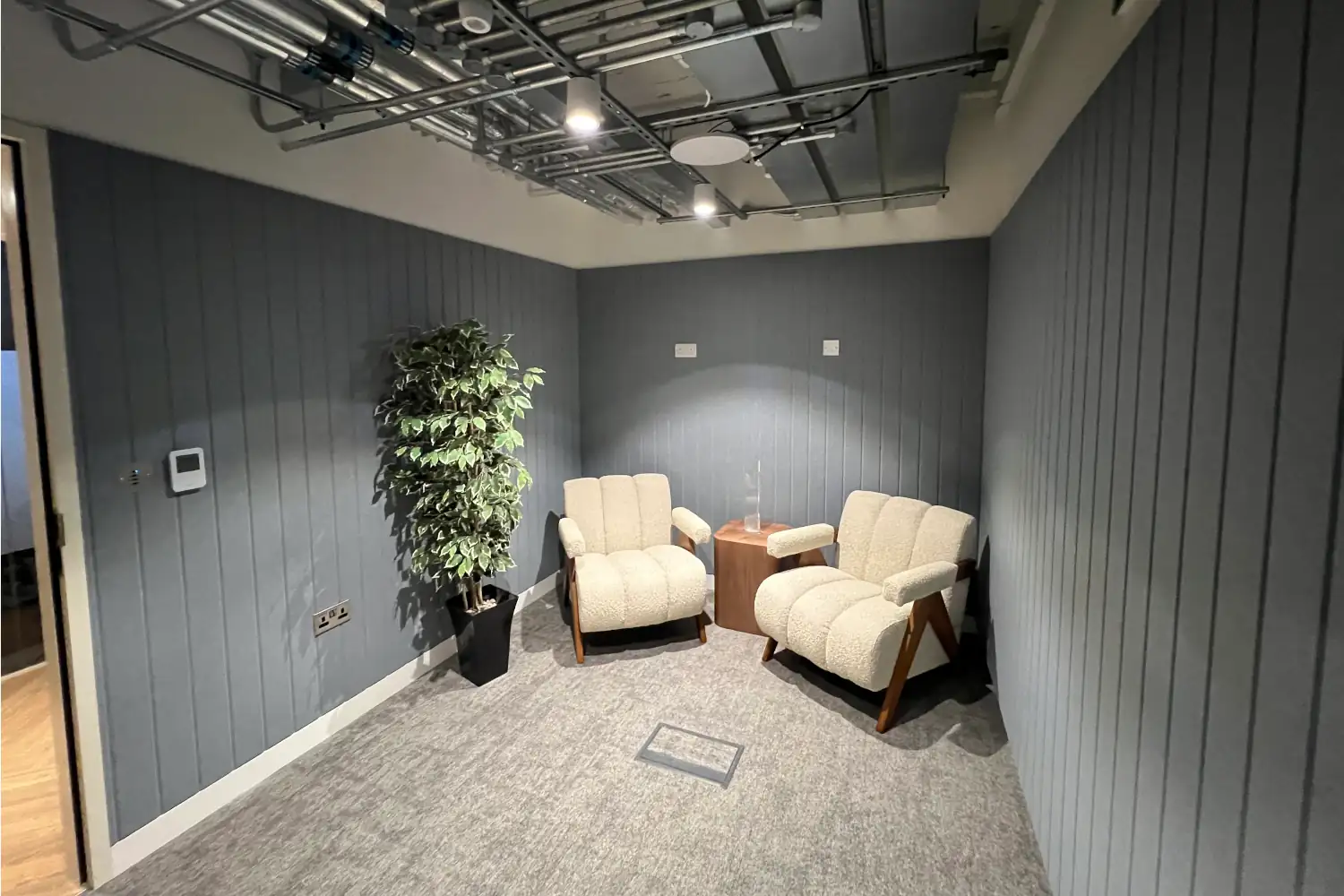
Koru Acoustics recently completed an acoustic treatment project for a 4m by 2.5m meeting room at a London investment firm. As well as hosting meetings and video calls, the space was used by the marketing team to record audio and video content, so a particularly low reverberation time was desirable.
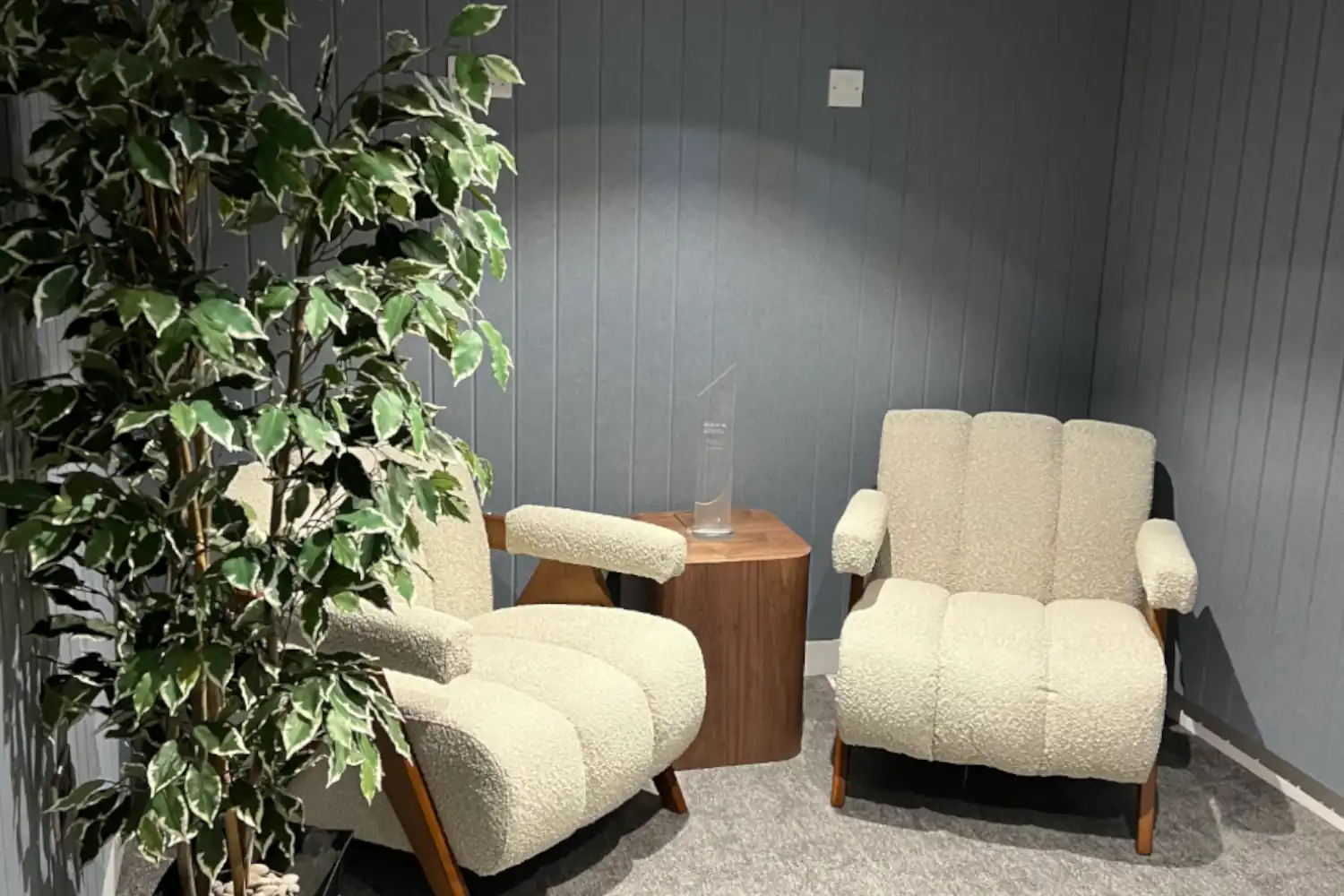
An exposed concrete soffit and extensive mechanical services made ceiling treatment impractical. Instead, we installed Acoufelt’s Fracture acoustic felt panelling across all four walls, with an additional Class A sound-absorbing backing behind the felt on one wall.
Our acoustic modelling estimated an initial reverberation time of 1.25 seconds, with the treatment predicted to reduce this to 0.33 seconds, a reduction of approximately 74%.
Treating all four walls was more extensive than most meeting rooms would require, but the additional absorption was appropriate given the room’s use for audio and video recording. With ceiling treatment impractical, our acoustic modelling showed that wall-mounted treatment alone could deliver a significant reduction in reverberation time.
Can acoustic panels be retrofitted in an existing room?
Yes. Most of our meeting room projects involve working around existing lighting, ventilation, screens, sprinklers and other services. Depending on the layout, panels can be positioned above furniture, fixed to suitable walls or arranged around ceiling fixtures.
The design also needs to maintain access to equipment and preserve the room’s day-to-day functionality.
How effective is acoustic treatment in meeting rooms?
Good acoustic treatment won’t make a meeting room silent. Its purpose is to reduce excessive reflections, making speech clearer and conversations easier to follow, both in person and over video calls.
The improvement depends on the starting conditions and treatment installed. We can model the expected reduction in reverberation during the design process and arrange on-site measurements where verification is required.
If your meeting room has excessive echo or poor speech clarity, get in touch for a free acoustic survey. We can assess the space, explain the options and provide a tailored design and quotation for supply and installation.