
School Dining Hall Acoustics: How to Reduce Lunchtime Noise

Thu Oct 15 2026
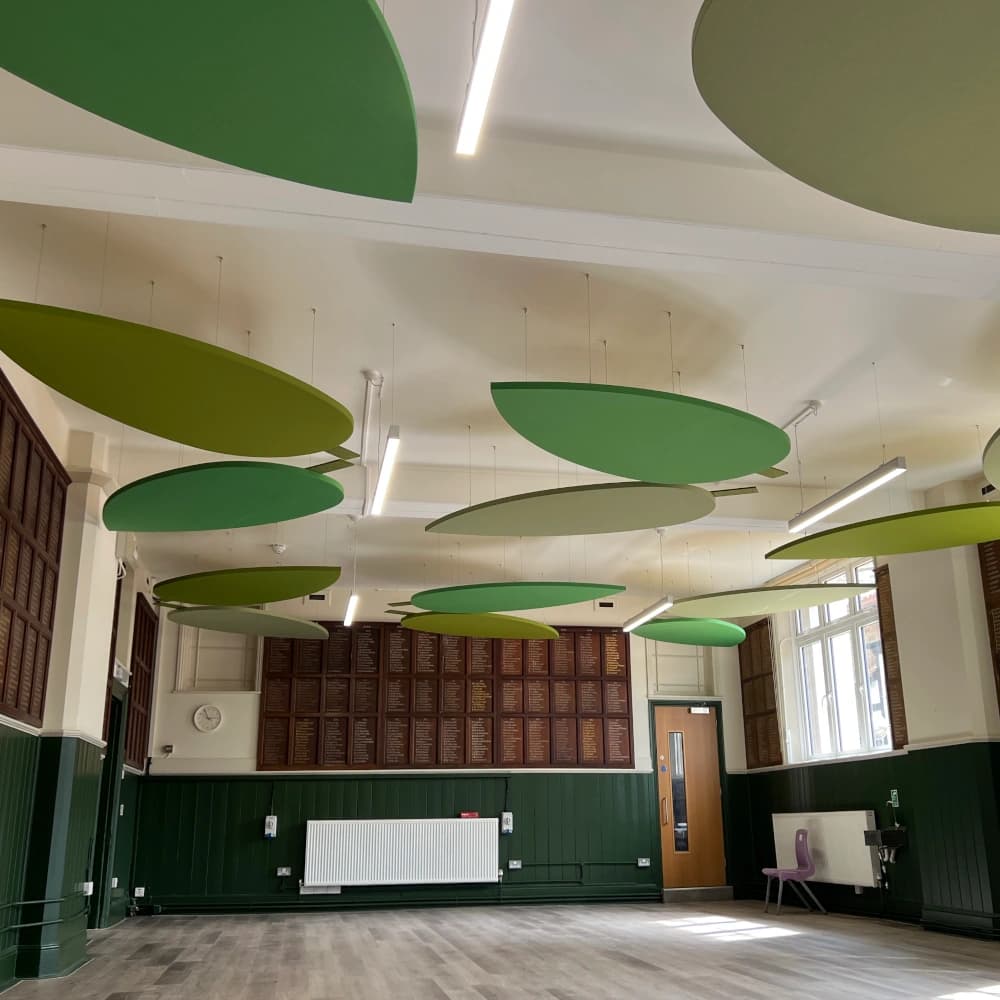
School dining halls are naturally busy spaces. Conversations, the scraping of chairs, the clink of cutlery, and the clatter of serving equipment all add to the daily noise. Because these rooms are typically designed with hard, easy-clean finishes and very little sound absorption, much of this sound is reflected back into the room rather than absorbed. This can create a significant build-up of noise, making conversation more difficult and the space uncomfortable for some pupils and staff.
But the core problem isn’t simply how much sound is being generated; it’s how long it remains in the room. Introducing the right level of sound absorption can reduce reverberation and create a more comfortable environment for pupils and staff.
Managing school dining hall acoustics
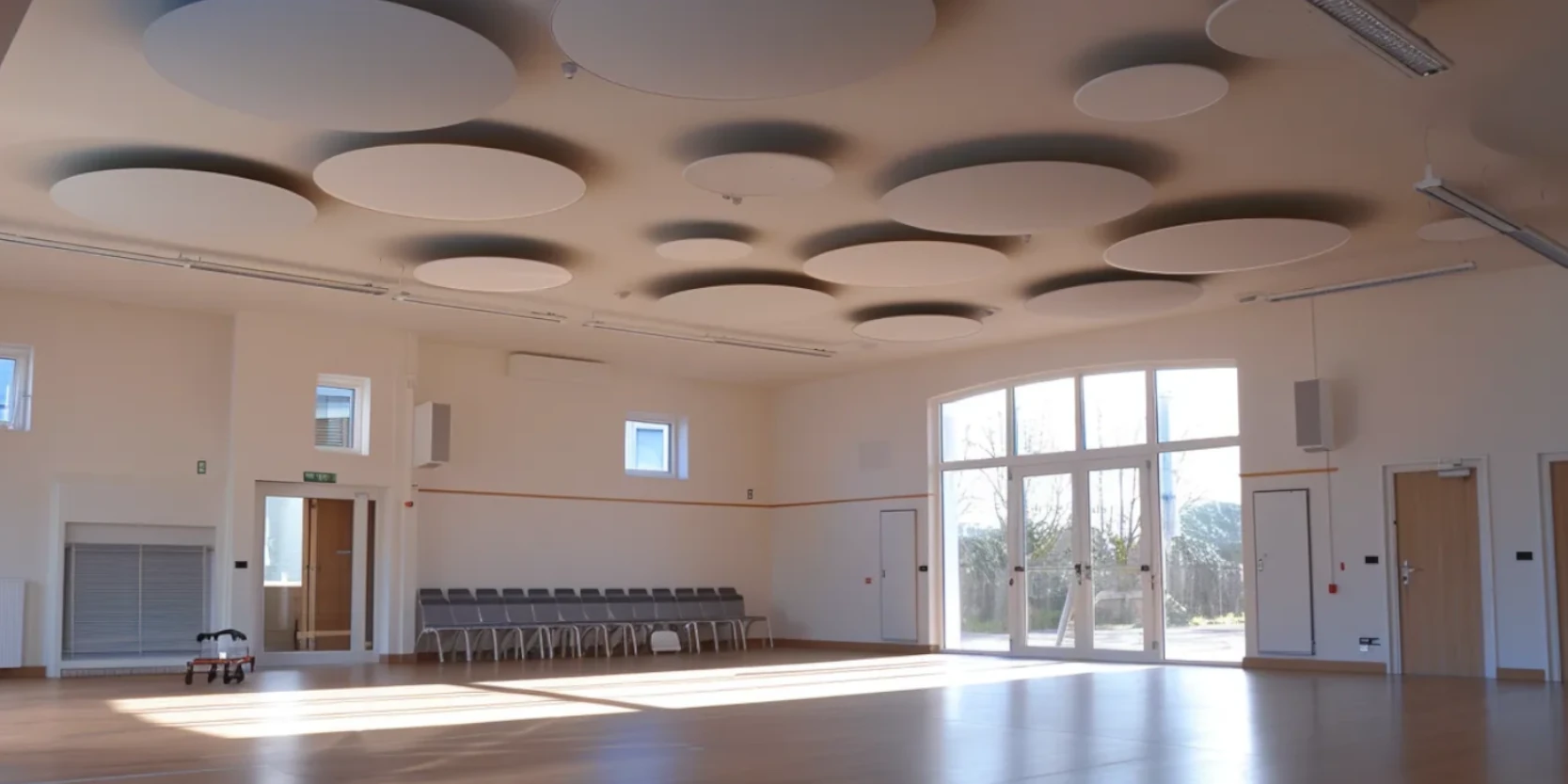
Why do school dining halls become so loud?
Having a large number of pupils in one room is part of the problem, but the way the room handles that sound is just as important.
Many school dining halls have high ceilings and hard, durable surfaces such as vinyl flooring, painted walls and large areas of glazing. These surfaces reflect sound rather than absorbing it, allowing conversations and other noises to persist and overlap. As the background noise rises, pupils naturally speak more loudly to make themselves heard, adding further sound to the room. Known as the Lombard effect, this feedback cycle can cause a busy dining hall to become progressively louder.
Add the unavoidable sounds of chairs, cutlery, serving equipment and ventilation, and it becomes easy to understand why lunchtime noise can feel excessive even when individual pupils are not being particularly loud.
The difference between noise and reverberation
Noise and reverberation are two different things. Noise is the sound generated by people, equipment and activities. Reverberation is the persistence of that sound within the room as it reflects repeatedly from hard surfaces.
Acoustic treatment does not stop pupils, chairs or cutlery from producing sound. Instead, it increases the amount of sound absorbed within the room, helping individual sounds decay more quickly rather than continuing to build up on top of one another.
This distinction is important when considering how to reduce noise in a school dining hall. The objective is not to make the room silent but to create a more controlled acoustic environment.
Why dining hall acoustics matter
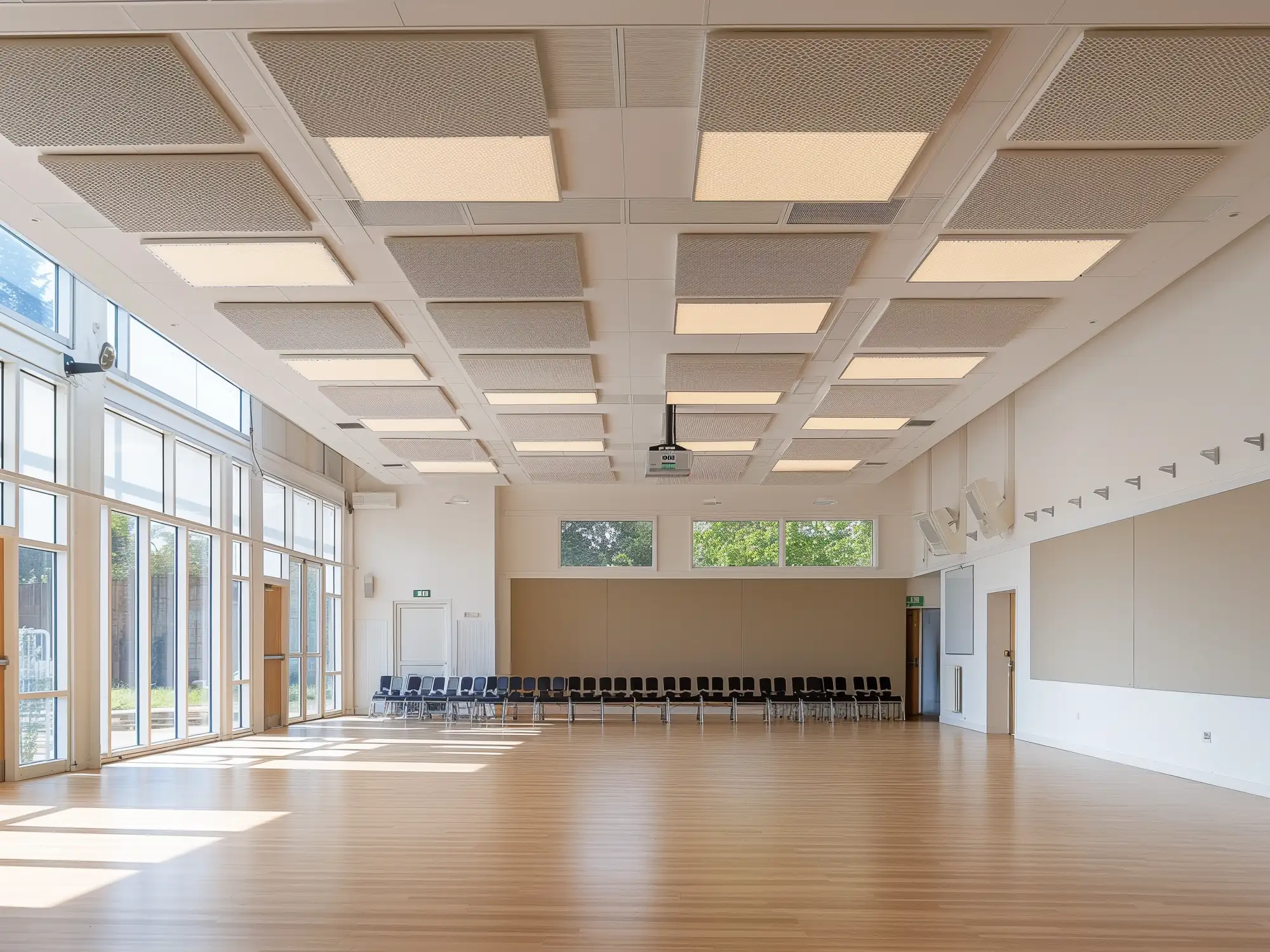
Poor school acoustics don’t just drown out lunchtime conversation. Excessive reverberation can reduce speech intelligibility and increase the effort required to follow a conversation. This can be particularly challenging for pupils with hearing impairments, speech and language needs or sensory sensitivities, including some neurodivergent pupils. A 2025 study into primary and nursery school canteens has found that high noise levels can impair communication, increasing vocal effort and reducing speech intelligibility.
More broadly, improving acoustics in education spaces can benefit both pupils and staff. Lunchtime supervisors need to be heard when giving instructions or responding to an incident, while reducing reverberation can also reduce the vocal effort required to speak across the room.
What does BB93 say about school dining room acoustics?
The Department for Education’s Building Bulletin 93 (BB93), Acoustic Design of Schools: Performance Standards, provides acoustic performance standards for schools and education buildings. Its objective is to provide acoustic conditions appropriate to the intended use of different spaces.
For dining rooms, BB93 gives a maximum mid-frequency reverberation time (Tmf) of:
- New build: ≤ 1.0 seconds
- Refurbishment: ≤ 1.5 seconds
For existing dining rooms undergoing refurbishment, the 1.5-second figure provides a useful benchmark when assessing the acoustic performance of the space and designing improvements.
BB93 reverberation guidance (in seconds) for common school spaces:
| School Space | New Build | Refurbishment |
| Dining Room | ≤ 1.0 s | ≤ 1.5 s |
| Primary school classroom | ≤ 0.6 s | ≤ 0.8 s |
| Secondary school classroom | ≤ 0.8 s | ≤ 1.0 s |
| Multi-purpose hall | 0.8–1.2 s | 0.8–1.5 s |
| Library | ≤ 1.0 s | ≤ 1.2 s |
BBB93 sets specific reverberation targets for a range of school spaces. This is particularly relevant where a dining hall is also used for assemblies, examinations or other activities. The intended uses of the room therefore need to be considered when setting an appropriate acoustic target.
These figures come from Table 6 of BB93 and refer to the mid-frequency reverberation time. It is worth remembering that reverberation time is only one part of assessing the space.
The most appropriate treatment for a school will depend on the size, shape, finishes, and intended use of the space.
How does acoustic treatment reduce dining hall noise?

Sound absorption is the most effective way to reduce reverberation in a dining hall. There are acoustic panels for school halls that can be installed on walls, ceilings, or suspended from the ceiling to absorb reflected sound. The effectiveness of a treatment depends not simply on the number of panels installed but on the total amount of acoustic absorption being introduced. A smaller area of high-performance sound absorption may provide considerably more useful absorption than the same area of a lower-performing product.
Acoustic products can be compared using recognised sound absorption classifications, with Class A representing the highest absorption class under EN ISO 11654.
Ceiling-mounted or suspended panels are often well suited to dining halls because large areas of absorption can be introduced while keeping walls clear. Wall panels can then be added where appropriate or where ceiling space is limited.
In multi-purpose halls, panel position and durability also matter. Treatment installed at lower levels may be vulnerable to impact, particularly where the space is also used for PE or other activities.
How much acoustic treatment is needed?
The amount of acoustic treatment required depends on the room’s size, finishes and existing reverberation time. An acoustic assessment can therefore help determine the level of sound absorption needed to achieve an appropriate target.
During a survey, we look at the room dimensions, finishes, layout, available treatment areas and existing services. Reverberation can then be estimated through acoustic modelling or measured on site where testing is required.
On one recent school dining hall project, for example, we estimated an existing reverberation time of around 4.0 seconds. The proposed acoustic treatment was modelled to reduce the reverberation time to approximately 1.5 seconds.
Can acoustic panels work around lights and other services?
Yes. Existing dining halls often have lighting, ventilation, sprinklers, speakers, projectors and other services that need to remain accessible.
Acoustic panels can be designed around these features, using the most suitable areas of available wall and ceiling space. At Koru Acoustics, we provide detailed CAD drawings showing the proposed panel layout and how the treatment will work around existing services and the room design.
How can better acoustics improve a school dining hall?

The aim is not to make a school dining hall quiet. It should still feel like a lively, social space. The difference is that individual sounds decay more quickly rather than continuing to reflect around the room.
With reverberation under better control, conversations become easier to follow, staff can communicate with less vocal effort and the build-up of noise at busy times is reduced. For pupils who find noisy environments particularly challenging, this can also make lunchtime a more comfortable and inclusive experience.
If excessive reverberation is making your school dining hall difficult to use, a free acoustic survey can help establish what is causing the problem and how much sound absorption is likely to be required.
Koru Acoustics designs, supplies and installs acoustic treatment for schools across the UK, with each solution tailored to the space, its users and how the room is used.
If you would like to improve the acoustics in your dining hall, get in touch to arrange a free survey.